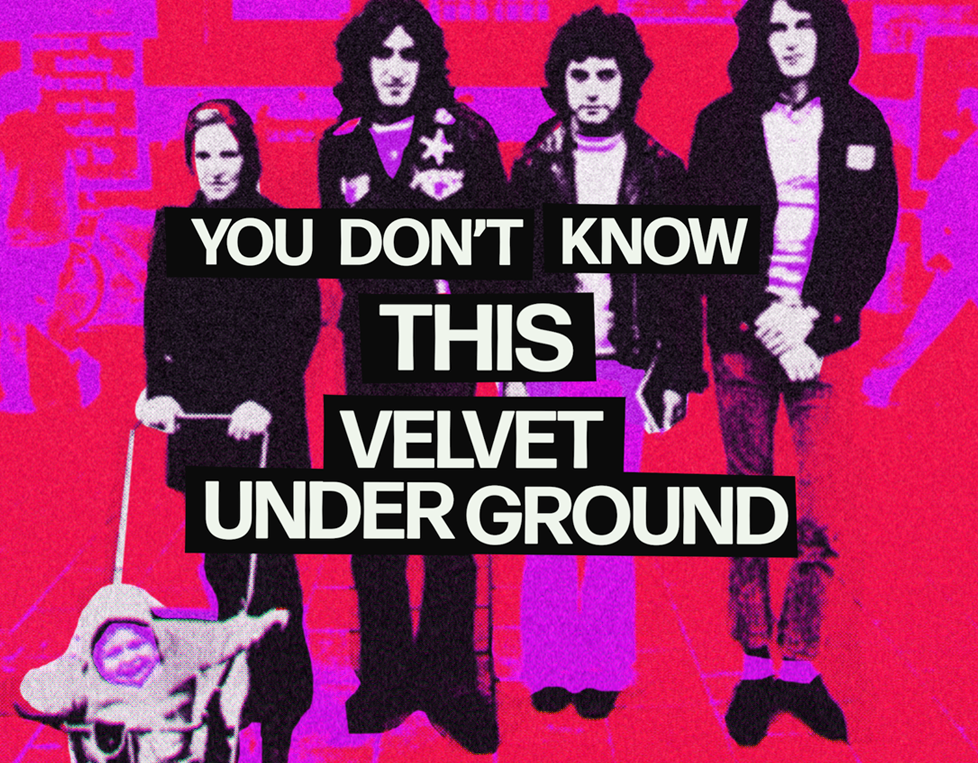
Everyone knows the Velvet Underground. But you don’t know this Velvet Underground.
Formed in New York City in 1964 by Lou Reed and John Cale, the VU united pop art minimalism and grim lyricism, bringing the avant-garde into rock & roll. The VU inspired nearly every subgenre or rock music that followed them: indie rock, noise, goth, jangle pop, twee, etc.
But by 1971, Reed and Cale were gone. The only Velvets left were drummer Maureen Tucker, and vocalist/guitarist Doug Yule, who’d joined after Cale departed and contributed to the band’s final records.
Warhol was gone too. Now Steve Sesnick, who’d been steadily pushing the band in a more pop direction, even with Reed at the helm, was in charge.
Citing its commercial appeal, Sesnick insisted they keep using the name The Velvet Underground. Yule and new members, keyboardist Willie Loco Alexander and bassist Walter Powers, were in favor of a name change, but Mo sided with Steve.
The most senior Velvet won out. So in 1971, “The Velvet Underground” went to play in Amsterdam.
When you think of the Velvet Underground, you think of New York’s art underground, drugs, subversion, and outre sexual expression. But here comes the Velvet Underground: four gangly rock dudes, Moe Tucker, and her one year old daughter Kerry.
In an interview with the Netherlands-based Sounds Magazine, Tucker explains:
"We're still playing the old numbers, but want to get away from that during the next time and do new things. People expect ‘Heroin', and for that reason we think about choosing a new name. Three of us plead for that, while I myself and manager Steve want to keep the old one. Of course economic aspects play a role: Under the name Velvet Underground we simply get more jobs."
Listening to tapes of the band’s performance on the Netherlands TV show Top Pop, you hear a group that, while less edgy than the original VU, is still doing something quite cool—offering a slightly more restrained and straight forward look at Reed’s songcraft. Here’s a little of “Cool It Down,” with its almost Television-like electric guitars. You can hear shades of this variation of the VU in Modern Lovers, Hackamore Brick, and The Feelies.
Eventually, Sesnick paired Doug Yule with studio musicians for one more album under the VU name, 1973’s Squeeze. It’s not a bad record, and it echoes the more mellow moments of Loaded with some good rockers thrown in, but it’s considered non-canonical by most fans, and it’s been left out of the story: Yule wasn’t inducted into the Rock & Roll Hall of Fame with the rest of the band—neither was the vocalist Nico—and Todd Haynes’ excellent 2021 visionary documentary The Velvet Underground (2021) doesn’t even touch on this era.
As for Yule, he later said of Sesnick: “He makes used car salesmen look like Lancelot.”